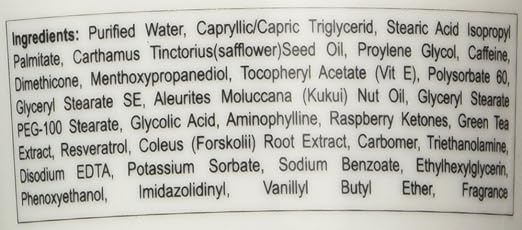
Shred JYM goes head-to-head with the 5 leading fat burner products on the market today.
References
Buzzigoli, G. and Ferrannini, E. Effects of acute hypercarnitinemia during increased fatty substrate oxidation in man. Metabolism 42(5):594-600, 1993.
Muller, D. M., et al. Effects of oral L-carnitine supplementation on in vivo long-chain fatty acid oxidation in healthy adults. Metabolism 51(11):1389-91, 2002.
Stephens, F. B., et al. New insights concerning the role of carnitine in the regulation of fuel metabolism in skeletal muscle. The Journal of Physiology 581: 431-444, 2007.
Cavallini, G., et al. Carnitine versus androgen administration in the treatment of sexual dysfunction, depressed mood, and fatigue associated with male aging. Urology. 2004 Apr;63(4):641-6.
Malaguarnera, M., et al. L-Carnitine treatment reduces severity of physical and mental fatigue and increases cognitive functions in centenarians: a randomized and controlled clinical trial. Am J Clin Nutr. 2007 Dec;86(6):1738-44.
Diepvens, K., et al. Obesity and thermogenesis related to the consumption of caffeine, ephedrine, capsaicin, and green tea. Am J Physiol Regul Integr Comp Physiol. 292(1):R77-85, 2007.
Berube-Parent. S., et al. Effects of encapsulated green tea and Guarana extracts containing a mixture of epigallocatechin-3-gallate and caffeine on 24 h energy expenditure and fat oxidation in men. Br J Nutr 94: 432–436, 2005.
Borchardt, R. T. and Huber, J. A. Catechol Omethyltransferase. Structure- activity relationships for inhibition by flavonoids. J Med Chem 18: 120–122, 1975.
Dulloo, A G., et al. Efficacy of a green tea extract rich in catechin-polyphenols and caffeine in increasing 24-h energy expenditure and fat oxidation in humans. Am J Clin Nutr 70: 1040–1045, 1999.
Dulloo, A. G., et al. Green tea and thermogenesis: interactions between catechin-polyphenols, caffeine and sympathetic activity. Int J Obes 24: 252–258, 2000.
Nagao, T., et al. Tea catechins suppress accumulation of body fat in humans. J Oleo Sci 50: 717–728, 2001.
Choo, J. J. Green tea reduces body fat accretion caused by high-fat diet in rats through beta-adrenoceptor activation of thermogenesis in brown adipose tissue. J Nutr Biochem 14: 671–676, 2003.
Chantre, P. and Lairon, D. Recent findings of green tea extract AR25 (Exolise) and its activity for the treatment of obesity. Phytomedicine 9: 3–8, 2002.
Kao, Y. H., et al. Modulation of endocrine systems and food intake by green tea epigallocatechin gallate. Endocrinology 141: 980 –987, 2000.
Hase, T., et al. Anti-obesity effects of tea catechins in humans. J Oleo Sci 50: 599–605, 2001.
Nagao, T., et al. Ingestion of a tea rich in catechins leads to a reduction in body fat and malondialdehyde-modified LDL in men. Am J Clin Nutr 81: 122–129, 2005.
Shixian, Q., yet al. Green tea extract thermogenesis-induced weight loss by epigallocatechin gallate inhibition of catechol-O-methyltransferase. J Med Food. 2006 Winter;9(4):451-8.
Harada, U., et al. Effects of the long-term ingestion of tea catechins on energy expenditure and dietary fat oxidation in healthy subjects. J Health Sci 51: 248 –252, 2005.
Diepvens, K., et al. Effect of green tea on resting energy expenditure and substrate oxidation during weight loss in overweight females. Br J Nutr 94: 1026–1034, 2005.
Hursel, R., et al. The effects of green tea on weight loss and weight maintenance: a meta-analysis. International Journal of Obesity 33, 956–961, 2009.
Shimotoyodome, A., et al. Exercise and green tea extract stimulate fat oxidation and prevent obesity in mice. Med Sci Sports Exerc. 37(11):1884-92, 2005.
Maki, K. C., et al. Green tea catechin consumption enhances exercise-induced abdominal fat loss in overweight and obese adults.J Nutr. 2009 Feb;139(2):264-70.
Venables, M. C. Green tea extract ingestion, fat oxidation, and glucose tolerance in healthy humans.Am J Clin Nutr. 87(3):778-84, 2008.
Kerksick, C., et al. Changes in muscle damage markers, soreness, and strength after a 14-day prophylactic period of antioxidant supplementation followed by eccentric exercise. The Journal of Strength and Conditioning Research: Vol. 20(4):e21, 2006.
Ahmed, S-U., et al. Green tea polyphenol epigallocatechin-3-gallate (EGCG) differentially inhibits interleukin-1 beta-induced expression of matrix metalloproteinase-1 and -13 in human chondrocytes. J Pharmacol Exp Ther. 2004 Feb;308(2):767-73.
Rasheed, Z., et al. Green tea polyphenol epigallocatechin-3-gallate inhibits advanced glycation end product-induced expression factor-alpha and matrix metalloproteinase-13 in human chondrocytes. Arthritis Res Ther. 2009;11(3):R71.
Henning, S. M., et al. Bioavailability and antioxidant activity of tea flavanols after consumption of green tea, black tea, or a green tea extract supplement. Am J Clin Nutr. 2004 80(6):1558-64.
Green, R. J., et al. Common tea formulations modulate in vitro digestive recovery of green tea catechins. Mol Nutr Food Res. 51(9):1152-62, 2007.
Acheson, K. J., et al. Caffeine and coffee: their influence on metabolic rate and substrate oxidation in normal weight and obese individuals. Am J Clin Nutr 33: 989–997, 1980.
Astrup, A., et al. Caffeine: a double-blind, placebo-controlled study of its thermogenic, metabolic, and cardiovascular effects in healthy volunteers. Am J Clin Nutr 51: 759–767, 1990.
Bracco, D., et al. Effects of caffeine on energy metabolism, heart rate, and methylxanthine metabolism in lean women. Am J Physiol Endocrinol Metab 269: E671–E678, 1995.
Dulloo, A. G., et al. Normal caffeine consumption: influence on thermogenesis and daily energy expenditure in lean human volunteers. Am J Clin Nutr 49: 44 –50, 1989.
Hollands, M. A., et al. A simple apparatus for comparative measurements of energy expenditure in human subjects: the thermic effect of caffeine. Am J Clin Nutr 34: 2291–2294, 1981.
Yoshida, T., et al. Relationship between basal metabolic rate, thermogenic response to caffeine, and body weight loss following combined low calorie and exercise treatment in overweight women. Int J Obes 18: 345–350, 1994.
Astrup, A. and Toubro, S. Thermogenic, metabolic, and cardiovascular responses to caffeine in man. Int J Obes Relat Metab Disord 17 Suppl 1: S41-S43, 1993.
Dulloo, A. G. Ephedrine, xanthines and prostaglandin-inhibitors: actions and interactions in the stimulation of thermogenesis. Int J Obes Relat Metab Disord 17 Suppl 1: S35-S40, 1993.
Bracco, D., et al. Effects of caffeine on energy metabolism, heart rate, and methylxanthine metabolism in lean and overweight women. Am J Physiol Endocrinol Metab 269: E671–E678, 1995.
Beck, TW, Housh, TJ, Schmidt, R, et al. “The acute effects of a caffeine-containing supplement on strength, muscular endurance, and anaerobic capabilities.” Journal of Strength and Conditioning Research, 2006, 20(3), 506–510.
Hogervorst E, et al., “Caffeine improves physical and cognitive performance during exhaustive exercise.” Med Sci Sports Exerc. 2008 Oct;40(10):1841-51.
Hudson, GM, Green, M, Bishop, P, et al. “Effects of caffeine and aspirin on resistance training performance and RPE.” Poster presented at ACSM Annual Meeting, May 30–June 2, New Orleans, LA.
Del Coso, J., et al. Caffeine-containing energy drink improves physical performance of elite rugby players during a simulated match. Appl Physiol Nutr Metab. 2013 Apr;38(4):368-74.
Motl RW, O'Connor PJ, Dishman RK. “Effect of caffeine on perceptions during moderate intensity cycling exercise.” J Pain. 2003 Aug;4(6):316-21.
Echeverri, D., et al. Caffeine’s vascular mechanisms of action. International Journal of Vascular Medicine, 2010.
Umemura, T., et al. Effects of acute administration of caffeine on vascular function. Am J Cardiol. 2006 Dec 1;98(11):1538-41.
Duncan, M. J. and Hankey, J. The effect of a caffeinated energy drink on various psychological measures during submaximal cycling. Physiol Behav. 2013 May 27;116-117:60-5.
Spence, A., et al. A Comparison of Caffeine versus Pseudoephedrine on Cycling Time-Trial Performance. Int J Sport Nutr Exerc Metab. In press, 2013.
Del Coso J, Caffeine-containing energy drink improves sprint performance during an international rugby sevens competition. Amino Acids. 2013 Jun;44(6):1511-9.
Deijen, J. B., et al. Tyrosine improves cognitive performance in cadets after one week of a combat training course. Brain Res Bull. 1999 Jan 15;48(2):203-9.
Deijen, J. B. and Orlebeke, J. F. Effect of tyrosine on cognitive function under stress. Brain Res Bull. 1994;33(3):319-23.
Owasoyo, J. O., et al. Tyrosine and its potential use as a countermeasure to performance decrement in military sustained operations. Aviat Space Environ Med. 1992 May;63(5):364-9.
Kawada, T., et al. Capsaicin-induced beta-adrenergic action on energy metabolism in rats: influence of capsaicin on oxygen consumption, the respiratory quotient, and substrate utilization. Proc Soc Exp Biol Med 183: 250–256, 1986.
Watanabe, T., et al. Capsaicin, a pungent principle of hot red pepper, evokes catecholamine secretion from the adrenal medulla of anesthetized rats. Biochem Biophys Res Commun 142: 259–264, 1987.
Kawada, T., et al. Some pungent principles of spices cause the adrenal medulla to secrete catecholamine in anesthetized rats. Proc Soc Exp Biol Med 188: 229–233, 1988.
Osaka, T., et al. Thermogenesis mediated by a capsaicin-sensitive area in the ventrolateral medulla. Neuroreport 11: 2425–2428, 2000.
Watanabe, T., et al. Adrenal sympathetic efferent nerve and catecholamine secretion excitation caused by capsaicin in rats. Am J Physiol Endocrinol Metab 255: E23–E27, 1988.
Yoshida T., et al. Effects of capsaicin and isothiocyanate on thermogenesis of interscapular brown adipose tissue in rats. J Nutr Sci Vitaminol (Tokyo) 34: 587–594, 1988.
Yoshioka, M., et al. Effects of red-pepper diet on the energy metabolism in men. J Nutr Sci Vitaminol (Tokyo) 41: 647–656, 1995.
Kawada, T., et al. Effects of capsaicin on lipid metabolism in rats fed a high fat diet. J Nutr 116: 1272–1278, 1986.
Henry, C. J. and Emery, B. Effect of spiced food on metabolic rate. Hum Nutr Clin Nutr 40: 165–168, 1986.
Westerterp-Plantenga, M. S., et al. Sensory and gastrointestinal satiety effects of capsaicin on food intake. Int J Obes 29: 682–688, 2005.
Yoshioka, M., et al. Combined effects of red pepper and caffeine consumption on 24 h energy balance in subjects given free access to foods. Br J Nutr 85: 203–211, 2001.
Yoshioka, M., et al. Effects of red pepper on appetite and energy intake. Br J Nutr 82: 115–123, 1999.
Yoshioka, M., et al. Effects of red pepper added to high-fat and high-carbohydrate meals on energy metabolism and substrate utilization in Japanese women. Br J Nutr 80: 503–510, 1998.
Lejeune, M. P. G. M., et al. Effect of capsaicin on substrate oxidation and weight maintenance after modest body-weight loss in human subjects. Br J Nutr 90: 1–10, 2003.
Ryan, E. D., et al. Acute effects of a thermogenic nutritional supplement on energy expenditure and cardiovascular function at rest, during low-intensity exercise, and recovery from exercise. J Strength Cond Res. 23(3):807-17, 2009.
Bloomer, R. J., et al. Effect of oral intake of capsaicinoid beadlets on catecholamine secretion and blood markers of lipolysis in healthy adults: a randomized, placebo controlled, double-blind, cross-over study. Lipids Health Dis. 15;9:72, 2010.
Stohs, S. J., et al. Effects of p-synephrine alone and in combination with selected bioflavonoids on resting metabolism and self-reported mood changes. Int J Med Sci. 8(4):295-301, 2011.
Stohs, S. J., et al. A review of the human clinical studies involving Citrus aurantium (bitter orange) extract and its primary protoalkaloid p-synephrine. Int J Med Sci. 9(7):527-38, 2012.
Sale, C., et al. Metabolic and physiological effects of ingesting extracts of bitter orange, green tea and guarana at rest and during treadmill walking in overweight males. International Journal of Obesity 1:10, 2006.
Gougeon, R., et al. Increase in the thermic effect of food by adrenergic amines extracted from Citrus aurantium. Obesity Research 13(7):1187-94, 2005.
Zenk, J. L., et al. Effect of multi-ingredient weight-loss product on metabolic rate and body composition. Nutrition 21:179-185, 2005.
Preuss, H. G., et al. Citrus aurantium as a thermogenic, weight reduction replacement: An overview. Journal of Medicine 33:1-4, 2002.
Stohs, S. J., et al. A review of the receptor-binding properties of p-synephrine as related to its pharmacological effects. Oxidative Medicine and Cellular Longevity, 2001.
Stohs, S. J., et al. The safety of Citrus aurantium (bitter orange) and its primary protoalkaloid p-synephrine. Phytotherapy Research, 2011.
Kaats, G.R. et al. A 60day double-blind, placebo controlled safety study involving Citrus aurantium (bitter orange) extract. Food and Chemical Toxicology 55:358-362, 2013.
Seifert, J. G., et al. Effect of acute administration of an herbal preparation on heart rate in humans. International Journal of Medical Sciences 8(3):192-197, 2011.
Stohs, S. J. and Preuss, H. G. Stereochemical and physiological differences between naturally occurring p-synephrine and synthetic p-synephrine. Journal of Functional Foods 4:2-5, 2012.